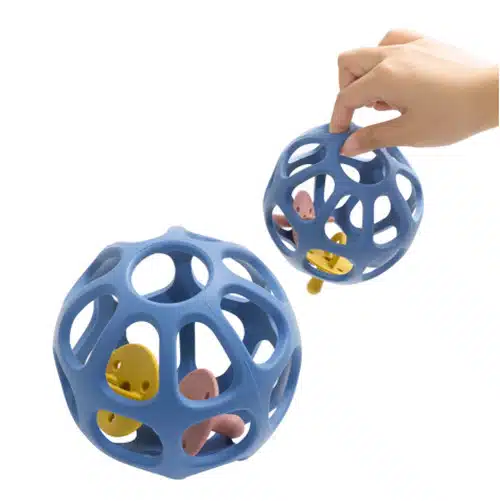
Silicone Teethers VS Wood Teethers, Which Is Best
Teethers have become a common product in the infant and child goods market. Two types that garner significant attention are silicone teethers and wooden teethers.
From the perspectives of product development and silicone OEM/ODM manufacturing, each material offers distinct characteristics. Silicone teethers are generally valued for their softness, versatility in incorporating various textures, and ease of cleaning. Wooden teethers, meanwhile, appeal to consumers who appreciate the texture of natural wood, a minimalist aesthetic, and an organic style.
But which is better? The answer cannot be determined solely by the material itself.
- If consumers prioritize a soft tactile feel, intricate textures, color customization, and ease of cleaning, silicone teethers are typically the better choice.
- If consumers prefer the look of natural wood, a simple design, and a less processed appearance, wooden teethers may better align with their aesthetic preferences.
- For brands aiming to blend natural elements with modern design, products combining silicone and wood can be considered; however, it is crucial to rigorously evaluate the structural connections, cleaning methods, and the risk of small parts detaching.
It must be emphasized that because teethers are placed directly into an infant’s mouth, safety cannot be guaranteed by marketing terms like “natural,” “food-grade,” or “soft.” Every aspect—including product structure, materials, surface treatment, age-appropriateness, usage instructions, and regulatory requirements in the target market—must be carefully assessed.
This article provides a systematic comparison of silicone and wooden teethers, covering material properties, production processes, procurement costs, common user pain points, quality control, and marketing, to help brands and procurement professionals make well-informed product decisions.
From the perspectives of product development and silicone OEM/ODM manufacturing, each material offers distinct characteristics. Silicone teethers are generally valued for their softness, versatility in incorporating various textures, and ease of cleaning. Wooden teethers, meanwhile, appeal to consumers who appreciate the texture of natural wood, a minimalist aesthetic, and an organic style.
But which is better? The answer cannot be determined solely by the material itself.
- If consumers prioritize a soft tactile feel, intricate textures, color customization, and ease of cleaning, silicone teethers are typically the better choice. – If consumers prefer the look of natural wood, minimalist design, and a less processed aesthetic, wooden teethers may better align with their preferences.
- If a brand aims to blend natural elements with a modern design style, products combining silicone and wood could be considered; however, it is essential to rigorously evaluate the structural integrity of the joints, cleaning methods, and the risk of small parts detaching.
It must be emphasized that because baby teethers are designed to be placed in the mouth, safety cannot be guaranteed simply by marketing terms like “natural,” “food-grade,” or “soft.” Evaluations must encompass product structure, materials, surface treatments, age suitability, usage instructions, and the regulatory requirements of the target market.
This article provides a systematic comparison of silicone and wooden teethers—covering material properties, production processes, procurement costs, common user pain points, quality control, and marketing—to help brands and procurement professionals make more informed product decisions.
What is Silicone Teethers?

A silicone teether is made of soft, food-grade silicone. It is BPA-free, PVC-free, lead-free, and phthalate-free. Silicone teethers are safe for teething babies to chew on and can be placed in the fridge to provide a cooling sensation. They are designed to relieve madly chomping babies during the teething phase. Soothes and massages teething gums. Most of them provide relief to your child’s teething pain and come in fun shapes.
Advantages Of Silicone Teethers


What is Wood Teethers?
The wood teether is made of 100% all-natural wood and organic terrycloth teether. Wooden teethers are made from natural materials.
Advantages of Wood Teethers
Why do you need the Silicone Teethers?
Babies tend to explore everything by putting an item in their mouths. All that mouthing encourages a baby to move her tongue inside the mouth. This gives the child experience of their mouth and gums. The motion inside the mouth also helps in learning speech sounds.
But, while they pass through the teething phase, their urge to put all things in their mouth increases. The chewing on things eases their pains. Teethers are specially designed for young children. Babies chew on toys might be because of other reasons too. The chewing is not necessarily associated with the teething.
You may have noticed that your baby chews on a blanket, keys, toys, and whatever things she can pick on. Since babies love to chew and chew on whatever they can find, teethers are the best toy to offer them to chew rather than any other things.
How to Produce Silicone Teether?
Product Design and DFM (Design for Manufacturing) Evaluation
Define the target age group, dimensions, gripping areas, textured surfaces for biting, thickness, structural design, and connection methods.
Material Selection and Validation
Select the appropriate silicone rubber material based on the product’s intended use; confirm specifications such as hardness, color, material documentation, and testing requirements for the finished product.
Mold Design and Manufacturing
Design the mold by accounting for the product’s shape, parting lines, demolding requirements, venting, dimensions, and surface texture specifications.
Silicone Molding
Utilize the appropriate manufacturing process—either injection molding or compression molding—based on the selected material and available equipment.
Post-Processing and Visual Inspection
Perform trimming (de-flashing), post-curing (if necessary), cleaning, and visual quality inspections in accordance with product specifications.
Finished Product Testing and Mass Production Validation
Verify dimensions, structural integrity, material composition, and relevant safety standards. Finalize samples and inspection criteria before proceeding to mass production.
From a manufacturing perspective, the development of silicone teethers involves more than just achieving a specific shape; it also requires addressing the following concerns:
- Ensuring the material is suitable for the product’s intended use and meets the safety requirements of the target market.
- Checking for structural issues such as sections that are too thin, sharp edges, areas prone to tearing, or features that hinder the demolding process.
- Ensuring there are no detachable decorative elements, connectors, or other small parts that could pose a hazard.
- Confirming that parting lines and flash (excess material) do not affect areas that will come into contact with the mouth.
- Ensuring consistency across different production batches regarding hardness, color, dimensions, and overall appearance.
If liquid silicone rubber (LSR) injection molding is used, the processes for metering, mixing, injection, and curing must be strictly controlled. If solid silicone rubber compression molding is used, focus must be placed on material preparation, mold cavity filling, vulcanization (curing), and the quality of the demolding process.
A factory cannot rely solely on the use of “food-contact grade silicone” as proof of a finished product’s safety. Material declarations, relevant safety testing, and the mechanical/structural verification of the final product must each be validated independently.
From the perspective of product development and silicone OEM/ODM manufacturing, both types of materials have distinct characteristics. Silicone teethers offer advantages such as softness, the ability to incorporate diverse textures, and ease of cleaning. Wooden teethers, on the other hand, appeal to some consumers due to their natural texture, minimalist aesthetic, and organic style.
But which one is actually better? The answer cannot be determined solely by the name of the material.
- If consumers prioritize a soft tactile feel, intricate textures, customizable colors, and ease of cleaning, silicone teethers are generally the better choice.
- If consumers prefer the look of natural wood, minimalist design, and a less processed aesthetic, wooden teethers may better align with their preferences.
- If a brand wishes to combine natural elements with a modern design, products featuring a mix of silicone and wood can be considered; however, it is essential to rigorously evaluate the structural connections, cleaning methods, and the risk of small parts detaching.
It must be emphasized that because baby teethers are placed directly into a child’s mouth, safety cannot be guaranteed merely by marketing terms like “natural,” “food-grade,” or “soft.” The product’s structure, materials, surface finish, recommended age range, usage instructions, and the regulatory requirements of the target market must all be factored into the assessment.
This article provides a systematic comparison of silicone and wooden teethers—covering material properties, production processes, procurement costs, common user pain points, quality control, and marketing—to help brands and procurement professionals make more informed product decisions.
More clear information, you can go how to make silicone teether?
What regulations require special attention in the U.S. market?
For baby teethers in the U.S. market, applicable requirements are determined based on the product’s intended use and classification.
The U.S. Consumer Product Safety Commission (CPSC) clarifies that certain teethers—those designed to soothe a baby but not primarily intended to relieve teething pain—fall under its jurisdiction and must comply with relevant toy safety standards. Conversely, if a product is marketed primarily for the relief of teething pain, it may fall under the regulatory purview of the U.S. Food and Drug Administration (FDA).
If a product qualifies as a “children’s toy” under U.S. regulations, standards such as ASTM F963 and other related requirements may apply. The CPSC notes that for children’s toys, applicable provisions must be determined on a product-specific basis; the responsible party is then required to ensure third-party testing is conducted and a Children’s Product Certificate (CPC) is issued.
For silicone and wooden teethers, the following aspects should be evaluated during the development phase:
- Mechanical Safety: Assessment of small parts, accessible points or sharp edges, structural integrity, and relevant “use and abuse” testing.
- Chemical Safety: Determination of necessary testing based on materials, coatings, colors, accessible components, and applicable regulatory requirements.
- Surface and Material Quality: Performance characteristics of silicone materials and finished products; surface treatments, coatings, and chemical compliance for wood.
- Labeling and Traceability: Age grading, warning statements, manufacturer information, batch traceability, and applicable packaging requirements.
It is inaccurate to make broad generalizations—such as claiming that “all silicone teethers only require FDA testing” or that “wooden teethers do not require chemical testing.” Specific testing requirements should be determined collectively by the importer, manufacturer, and testing laboratory, based on the product’s design and the target market.
How to Control the Quality of Silicone Teethers?
I: Flash, Burrs, or Surface Defects
Potential Causes: Poor fit at the mold parting line, mold wear, inappropriate molding parameters, or inadequate post-processing.
Solutions: Inspect the mold parting line, establish acceptance criteria for flash and surface quality, and focus inspections on the mating areas. Do not rely on manual trimming as a substitute for stable process control.
II: Tearing, Breakage, or Detachment of Components
Potential Causes: Sections that are too thin, a mismatch between materials and design, stress concentrations caused by notches or sharp corners, or unreliable connections in assembled structures.
Solutions: Optimize structural design and material selection; identify and reinforce weak areas. Conduct appropriate durability and “use-and-abuse” testing, covering both intended use and foreseeable misuse.
III: Inconsistencies in Hardness, Color, or Dimensions
Potential Causes: Variations between batches of raw materials, unstable color control, fluctuations in molding conditions, or inconsistent inspection methods.
Solutions: Standardize material specifications, color requirements, and measurement methods for critical dimensions. Maintain records of production batches, and implement both first-article and in-process inspections.
Final Conclusion:
No matter wooden or Silicone teethers are great products for keeping the baby away from crying. Choosing the perfect Silicone teether is pivotal for a safe and enjoyable feeding journey for your little ones.There is no absolute winner between silicone and wooden teethers that suits every consumer. For brands, the better choice is a product that meets the needs of their target users, complies with relevant safety standards, is easy to maintain, and can be manufactured and delivered consistently.
For brands looking to develop differentiated baby products, silicone teethers offer greater design flexibility in terms of color, texture, and complex shapes; meanwhile, wooden teethers hold their own distinct market position for those favoring a natural aesthetic. Long-term competitiveness is built by effectively integrating product design, material selection, safety verification, and manufacturing quality—rather than relying solely on labels like “silicone” or “natural wood.”
Jution Silicone is a leading Silicone baby products factory, that proudly offers wholesale solutions and custom OEM services tailored to meet your needs. Jution silicone commitment to bulk orders, wholesale distribution, and customizable silicone baby teether designs ensures not just safety and durability but also versatility in mealtime solutions.
Whether you seek bulk silicone baby teether, wholesale options, or customized OEM designs, Jution silicone stands as a reliable partner. With an unwavering focus on quality, safety, and personalized solutions, Jution Silicone remains your ultimate destination for silicone baby pacifiers, catering to brands, retailers, and caregivers alike in the existing world of feeding essentials!
Contact Jution silicone to Bring your own brands teether to the Market!
FAQ:
Q1: Are silicone teethers inherently safer than wooden ones?
Not necessarily. Both silicone and wooden teethers carry their own specific risks related to their structure and materials. For silicone products, concerns include tearing, flash (excess material from the molding process), and the structural integrity of components. For wooden products, concerns include splinters, cracks, surface treatments, and the stability of joints or connections. Safety should be evaluated based on the product’s design, materials, and applicable testing standards.
Q2: Since wooden teethers are made from natural materials, are they exempt from chemical testing?
That is not the case. While the U.S. Consumer Product Safety Commission (CPSC) provides specific exemptions from soluble heavy metal testing for certain types of raw, untreated wood, this does not mean all wooden teethers are exempt from chemical safety requirements. Products that have been coated, stained, or otherwise treated are subject to requirements based on their specific composition and the relevant regulations.
Q3: Can all silicone teethers be sterilized by boiling?
No. Whether a product is suitable for boiling, steam sterilization, or dishwasher cleaning depends on its specific material, construction, and the manufacturer’s validated usage instructions. One cannot assume that all silicone products are compatible with these cleaning methods simply because they are made of silicone.
Q4: Can wooden teethers be washed with water?
Always follow the manufacturer’s instructions. Many wooden products should not be soaked for extended periods; after cleaning, they should be wiped dry and allowed to dry completely. If any cracks, splinters, or surface damage appear, the product should no longer be used.
Q5: Is it feasible to create custom colors and complex textures for silicone teethers?
Generally, yes. With the right molds, materials, and manufacturing processes, it is possible to produce a wide variety of colors and surface textures. However, factors such as color consistency, structural integrity, and ease of cleaning must be verified through samples and mass-production testing.
Q6: Are teethers that combine silicone and wood superior?
While combination designs offer diverse appearances and tactile experiences, they are not necessarily “better.” It is critical to verify the strength of the connections, the reliability of any cords or other components, the potential for “blind spots” (hard-to-clean areas), and the risk of parts detaching.
Q7: What testing is required for silicone teethers sold in the U.S. market? First, determine the product classification and intended use, then develop a testing plan based on applicable requirements such as those from the CPSC, ASTM F963, and the CPSIA. Some products primarily intended to alleviate teething pain may fall under the jurisdiction of the FDA; therefore, the regulatory path cannot be determined solely by the product name.
Q8: Is a Children’s Product Certificate (CPC) required for silicone teethers?
If a product qualifies as a children’s toy—as defined by U.S. regulations—and is subject to children’s product safety rules, the responsible party is generally required to issue a Children’s Product Certificate (CPC) based on applicable regulations and test data. Importers or manufacturers should confirm the specific requirements based on the product’s classification.
Q9: Are silicone teethers necessarily more expensive than wooden teethers?
Not necessarily. While silicone teethers may require an initial investment in molds, they offer advantages in terms of complex shapes and consistent, high-volume production. Wooden teethers, by contrast, may require more manual labor for sanding, surface finishing, and quality screening. The actual cost depends on product design, order volume, testing, packaging, and quality standards.
Q10: Should a brand choose a single-material or a multi-material design?
If the priorities are structural simplicity, ease of cleaning, and customization of colors or textures, a single-material silicone design is a good starting point. If a brand places greater value on the aesthetic and tactile qualities of wood, a wooden design may be appropriate. Multi-material designs are suitable for brands seeking a unique, differentiated appearance, though they require additional validation regarding the safety of joints/connections and potential cleaning challenges.
Q11: How should baby teethers be stored?
Teethers should be stored in a clean, dry environment in accordance with the product instructions, avoiding exposure to excessive heat, chemicals, or prolonged dampness. For wooden teethers, particular attention should be paid to humidity levels and the condition of the surface. Before reuse, always inspect the product for cracks, tears, or loose components.
Q12: Can silicone teethers alleviate a baby’s teething pain?
While teethers can help satisfy a baby’s need to bite and explore, they should not be marketed as a proven medical treatment unless the product classification, supporting evidence, and applicable regulations permit such claims. The U.S. CPSC has also noted that products primarily intended to alleviate teething pain may fall under the jurisdiction of the FDA.