
Silicone Sensory Toys: How They Support Sensory and Cognitive Development
Between 0 and 3 years, a child’s cognitive development runs through the senses: touch, sight, and hearing are the input channels for every later skill. Toys used at this stage need to be safe to chew, durable, and designed for sensory stimulation. This article looks at silicone sensory toys from the perspectives of material, design, production, and purchasing, based on factory experience, customer feedback, and maternity forum and social media data.

What Are Silicone Sensory Toys?
Silicone sensory toys are made from food-grade silicone and designed for children’s sensory integration training. Through varied shapes, textures, and colors, they stimulate touch, vision, and hearing, helping the brain and body coordinate — the basis of adaptive responses to the external environment.
Types of Sensory Stimulation
|
Sense |
Typical Toys |
Training Effect |
|---|---|---|
|
Tactile |
Pinch toys, soft silicone building blocks |
Textured surfaces and pinching exercises develop hand muscles and stimulate the nerves in hands and feet |
|
Auditory |
Rattles, button-sound toys |
Pressing a button or shaking the toy produces sound, satisfying the urge to chew while stimulating hearing |
|
Visual |
Silicone spinning tops, visual perception balls |
Bright colors stimulate visual development and train eye flexibility and concentration |
Functional Forms
Basic training toys — soft blocks, rattles, and teethers. Grasping and squeezing build hand strength; chewable designs massage the gums and relieve teething pain.
Multifunctional toys — silicone button pads and ring stackers. One toy covers several functions and supports multi-sensory development.
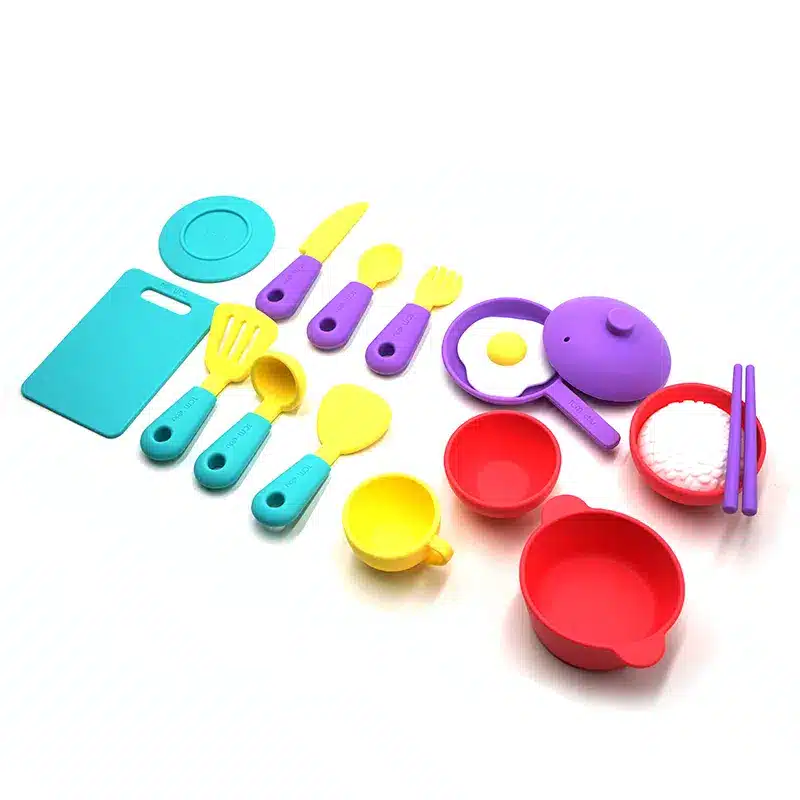
Situational interactive toys — silicone bath toys and fruit-slicing sets. Children rehearse daily-life scenarios through concrete actions.


How Silicone Sensory Toys Support Intellectual Development
Neural pathway building. Bright colors and varied textures stimulate connections between visual and tactile neurons. Studies show that babies who use sensory toys have a 23% higher density of brain neural connections than average at 12 months of age.
Cause-and-effect understanding. Dynamic features such as disassembly, assembly, and squeeze-to-sound strengthen the synergy between the temporal auditory cortex and the frontal lobe’s executive functions. A toy that sounds when squeezed teaches cause and effect — training directly linked to later problem-solving ability.
Attention span. Progressive visual stimulation extends how long an infant can stay focused. Research on visual tracking training shows the attention span of three-month-old infants increasing by 2–3 times.
Feedback from customers who purchased sensory toys from Jution indicates measurable improvements in babies’ attention and exploratory behavior after several months of use. To customize silicone sensory toys with specific functions and shapes, contact the Jution team.
Who These Toys Are For
Parents of 0–3-year-olds who prioritize safety and evidence-based parenting.
Early-childhood education institutions — nurseries and kindergartens that need professional, durable teaching aids.
The gift market — varied shapes and functions make silicone sensory toys a practical newborn or holiday gift.
When to Introduce Them
|
Age |
Development Stage |
How to Use |
|---|---|---|
|
0–3 years |
Early sensory development; physiological functions and basic abilities forming |
Provide a variety of sensory toys so development accumulates through play |
|
3–6 years |
Rapid sensory development |
Fun activities promote fine and gross motor development and can strengthen social skills |
Where They Are Used
Family interaction. Food-grade silicone is non-toxic and safe to chew, and the soft surface prevents injuries, so parents can join the play directly.
Travel and outings. Compact and portable, the toys slip into a bag or hang on a stroller to comfort the baby anywhere.
Early-childhood education. As teaching aids, they improve concentration and interactivity. Surface textures help children adapt to tactile stimulation, and combined with jumping and shaking movements they promote muscle control and motor development.

How Silicone Sensory Toys Are Produced
Raw material selection. Food-grade silicone is mandatory. Barrel temperature (160–220 °C) and injection pressure (50–100 bar) are adjusted to the product’s hardness requirements.
Mold design. Molds are built around the product’s functions and sensory features so complex structures mold accurately. Low-temperature molds (30–50 °C) shorten the molding cycle to 10–30 seconds per shot.
Injection molding. Liquid silicone injection molding injects the molten material into the mold, where it cools and solidifies quickly — enabling one-piece molding of multi-color, multi-hardness composite structures.


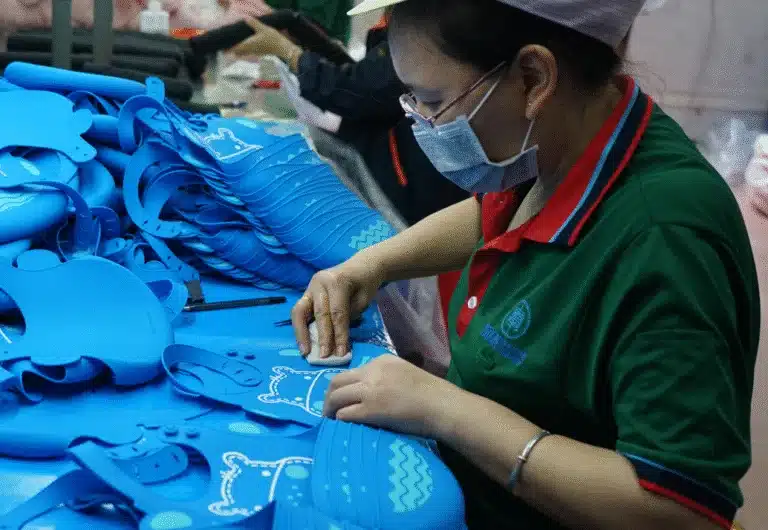
Surface treatment. After molding, parts are deburred and polished so no sharp edges remain.
Quality control and safety. Finished toys are tested for heat resistance, tensile strength, bite strength, and chemical safety before release.
How Quality and Safety Are Controlled
Raw material control. Suppliers are ISO-certified. Each incoming batch is tested for volatile matter (≤0.5%), hardness deviation (±2 Shore A), and Mooney viscosity (40–60 MU). Warehouses are kept dry and dark, with first-in-first-out rotation to limit performance degradation in storage.
The key production parameters:
|
Item |
Specification |
|---|---|
|
Formula design |
Masterbatch and additive ratios controlled to an error of ≤0.3% for uniform, stable molecular chains |
|
Molding process |
Temperature ±2 °C, pressure 8–15 MPa, time t90 + 10% — prevents bubbles and deformation |
|
Vulcanization |
PLC-monitored; medical-grade toys use stepwise curing: 120 °C × 1 hour, then 150 °C × 2 hours, so cross-linking meets standard |
Finished-product testing. Physical tests cover hardness and tear strength (≥25 kN/m). Medical-grade toys must pass ISO 10993 biocompatibility testing; food-grade toys must comply with FDA and LFGB requirements. Products are also submitted to third-party testing agencies for compliance verification. Our inspection items and acceptance criteria are documented on the quality control standards page.
How to Choose the Right Silicone Sensory Toys
Cleaning and Maintenance
Cleaning. Soak in warm water with a neutral detergent for 10 minutes, clean crevices with a soft brush, and rinse thoroughly.
Disinfection. Wipe with a diluted infant-safe disinfectant and let it sit for 10 minutes, then rinse — or boil for 1–2 minutes.
Drying. Air-dry thoroughly to prevent mold, and avoid prolonged direct sunlight.
FAQ
Conclusion
In early childhood, cognitive ability builds on sensation and movement. Well-designed silicone sensory toys turn everyday play into structured sensory training, and their safety profile makes them suitable from the first months. For brands and retailers planning a sensory toy line, the supplier’s control over material grade, molding parameters, and biocompatibility testing is the deciding factor. Contact the Jution team to discuss custom designs and certification requirements.
