
A Comprehensive Guide to Selecting and Using Silicone Baby Bibs
A bib is the most frequently used item in daily feeding: it catches dropped food and saliva and keeps clothes clean through every meal. Among the available materials, 100% food-grade silicone has become the standard choice, because it is safe, easy to clean, and durable. This guide covers the types of silicone bibs, when and why babies need them, and how to select, clean, and maintain them.
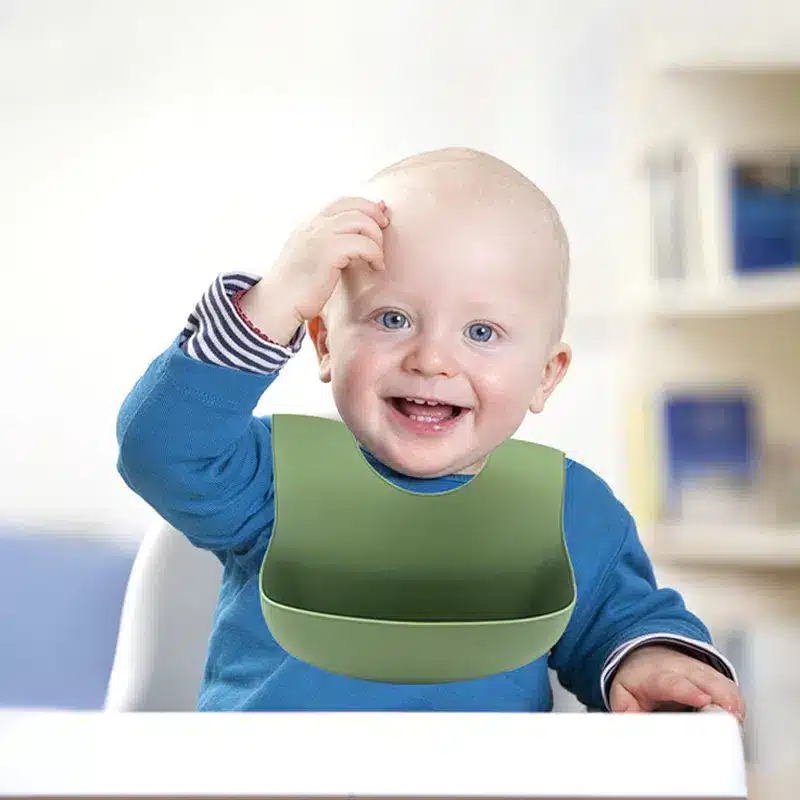
What Is a Silicone Bib?
A silicone bib is made from 100% food-grade silicone and is designed primarily for infants and young children, with versions also serving the elderly and users with special needs. Its job is simple: catch food and saliva during meals so clothing stays clean.
The core strengths are a safe, non-toxic material, easy cleaning, and durability. A three-dimensional pocket design adds practicality — waterproof and stain-resistant, food-catching, easy to clean — and supports independent feeding training.
Types of Silicone Bibs
Silicone bibs are classified by style, fastening method, and functionality:
|
Classification |
Type |
Features |
|---|---|---|
|
By style |
Classic bib |
Basic style, no pocket, fastened with snaps or Velcro |
|
By style |
3D bib |
3D pocket at the bottom catches food scraps |
|
By style |
Overall bib |
Covers the upper body and sleeves for greater protection |
|
By fastening |
Velcro |
Adjustable to different neck sizes; may lose stickiness over long-term use |
|
By fastening |
Snap or button |
More secure and durable |
|
By fastening |
Elastic band |
Elastic design; may not suit babies with thicker necks |
|
By functionality |
Foldable |
Folds into a compact size for easy carrying |
|
By functionality |
Removable pocket |
The pocket detaches for separate washing, which is hygienic and convenient |


Why Babies Need Silicone Bibs

Who Cares About Silicone Bibs
New parents. If food stains on clothes and food residue on the floor are a daily problem, a deep-pocket, large-capacity silicone bib catches what the baby drops and keeps greasy stains off clothing.
Early-education institutions and nurseries. Group feeding makes cleanliness harder to maintain. Water- and oil-resistant silicone bibs with pockets reduce mealtime mess.
Gift buyers. Silicone bibs come in many colors and shapes with presentable packaging, combining practicality and appearance — a reliable newborn gift.
When Should Babies Start Using Silicone Bibs
|
Age |
Feeding Stage |
What to Look For |
|---|---|---|
|
0–5 months |
Drooling begins |
A bib protects the delicate neck area and prevents saliva buildup |
|
6–8 months |
First solid foods; active, playful eating |
Waterproof bibs with a detachable pocket |
|
9 months + |
Growing range of movement; interest in self-feeding |
Stain-resistant bibs that keep clothes clean |
Where Silicone Bibs Are Used
Daily family life. At the table, especially during complementary-food introduction and self-feeding practice, a silicone bib eliminates much of the post-meal cleaning on floors and clothes.
Dining out. Compact, lightweight, and foldable, a silicone bib stores easily and helps the baby adapt to unfamiliar dining environments, from restaurants to outdoor camping.
Early-education institutions. The smooth surface and deep pocket catch food dropped by babies learning to eat independently, protecting clothes and reducing the cleaning burden on staff.
How Silicone Bibs Are Produced
Raw material control. Production starts with silicone suppliers certified for food-contact materials. Raw materials go through visual inspection (color, transparency), physical property testing (hardness, tensile strength), and chemical property testing (acid and alkali resistance, aging resistance) to confirm compliance with the national food safety standard GB 4806.11.
Molding and post-processing. Injection or compression molding requires precise temperature and pressure control to avoid bubbles and deformation. After molding, cleaning and drying leave a smooth, residue-free surface.
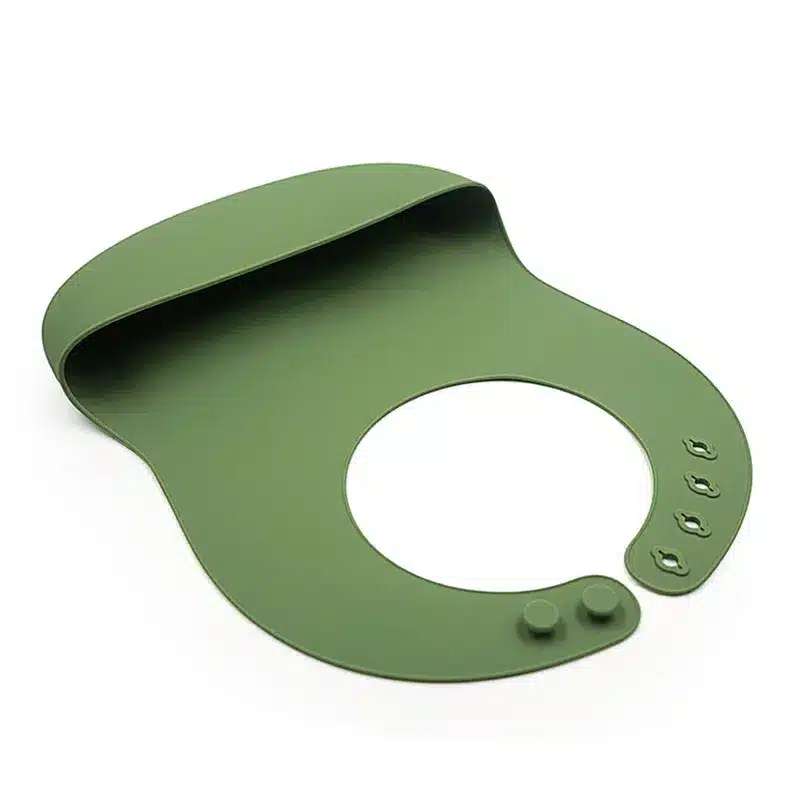

Finished product safety testing. Online monitoring tracks dimensional accuracy and surface finish in real time. Finished products pass microbial testing and migration testing — N-nitrosamines and aromatic primary amines must not be detected. Edges must be smooth and burr-free, and any small holes or gaps must be ≤3 mm in diameter to eliminate swallowing risks.
How the Quality of Silicone Bibs Is Controlled
Raw material quality control. We source from FDA/LFGB-certified food-grade silicone suppliers. Incoming inspection covers volatile matter (≤0.5%), hardness deviation (±2 Shore A), and Mooney viscosity (40–60 MU); industrial-grade silicone is additionally tested for oil resistance and tear strength (≥25 kN/m). Raw materials are stored in a dry, dark warehouse under first-in-first-out management so they are used within their validity period.
The key production and inspection parameters are:
|
Item |
Specification |
|---|---|
|
Mixing |
Twin-rotor internal mixer; initial temperature 20–25 °C; mixing time 8–12 minutes; discharge temperature ≤50 °C; Mooney viscosity fluctuation ±3 MU |
|
Molding |
Mold temperature 160–180 °C; venting grooves 0.5–1 per cm²; injection rate 15–25 g/s |
|
Vulcanization |
PLC system monitors temperature (±2 °C), pressure (8–15 MPa), and time (t90 + 10%) in real time |
|
Cleanliness |
Medical-grade production mixes and cures in a Class 10,000 cleanroom to prevent microbial contamination |
|
Appearance inspection |
No bubbles, tears, or dimensional deformation; impurity particles ≤0.3% |
Equipment accuracy is inspected regularly to maintain mold surface finish and release quality. The full set of inspection items and acceptance criteria is documented on our quality control standards page.

How to Choose the Right Silicone Baby Bib
Safety. Check the product’s manufacturing information before purchase and choose bibs that are BPA-free and non-toxic.
Weight. Choose a lightweight bib — neck comfort weight ≤200 g. Heavy bibs can compress the cervical spine and interfere with feeding and neck development.
Fastening design. Buckles or clips with an adjustable neck circumference accommodate the baby’s growth.
Cleaning and Maintenance
Cleaning. Before and after each use, wash the bib with a neutral detergent, gently scrub stains with a soft brush, and rinse thoroughly with warm water. Dishwashing liquid handles stubborn stains.
Drying and storage. Hang the bib in a well-ventilated area away from direct sunlight, and store it in a cool, dry place. Keep it away from sharp objects that can scratch the surface and shorten its service life.
Sterilization. Silicone bibs are heat-resistant and can be sterilized by boiling or steaming. Keep the bib from touching the bottom of the pot, and boil for 1–2 minutes.
Precautions for Use
Initial odor. Silicone absorbs odors, so a slight smell out of the package is normal. Rinse with clean water and air-dry in a ventilated place; the odor will mostly disappear.
Appropriate fit. The bib should not constrict the baby’s neck. Use a finger as a cushion to check the fit when fastening.
Timely replacement. Inspect the bib before each use. A damaged bib must be discarded immediately — continued use can cause allergies, inflammation, and skin maceration under the baby’s neck.
FAQ
Conclusion
Food residue on clothes and floors is a daily pain point in infant feeding, and a well-designed silicone bib solves most of it. For parents, the choice comes down to certified materials, appropriate weight, and a secure fastening. For brands and retailers, it comes down to whether the manufacturer controls raw material certification, molding parameters, and finished-product inspection at the factory level. Jution is a one-stop custom silicone product manufacturer covering production from material intake to final inspection. Contact the Jution team to discuss custom bib designs, colors, and production timelines.
