
The Diversity of Silicone Toys: Stimulating Babies’ Desire to Explore
During a baby’s critical growth period, sensory stimulation and exploration drive neurodevelopment. Silicone toys deliver both, in an unusually wide range of forms. This article maps the main types of silicone toys, explains why babies need them, matches them to ages and settings, and covers production, quality control, buying, and cleaning.
What Are Silicone Toys?

Silicone toys are made of food-grade silicone: soft, elastic, skin-like in feel, non-toxic, odorless, hypoallergenic, and easy to clean and disinfect.
They come in varied textures, shapes, colors, and functions — combining tactile stimulation, visual training, auditory development, and hand-eye coordination — which makes them especially suitable for infants with sensitive constitutions.
The Four Main Types


Why Babies Need Silicone Toys
Matching Toys to Age
|
Stage |
Recommended Toys |
|---|---|
|
Infancy |
Bright-colored silicone rattles with soft sounds for visual and auditory development |
|
0–6 months |
High-contrast visual stimulation toys |
|
6–12 months |
Multi-textured tactile toys |
|
12–24 months |
Multi-functional toys; simple puzzles for observation and hands-on skills; blocks for imagination |
|
24–36 months |
Creative and challenging toys |
|
Over 5 years |
Complex build-and-rebuild sets and kneading decompression toys |
Where Silicone Toys Are Used

How Silicone Toys Are Made
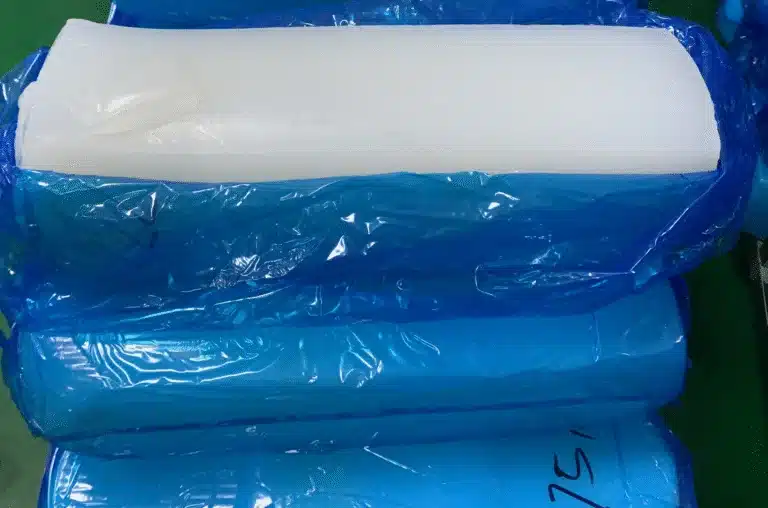
Production starts with food-grade silicone at a hardness matched to the product (e.g., Shore 20° or 40°), compounded with vulcanizers and color pastes. Precision molds are CNC-machined or engraved, then the compound is vulcanization-molded under strictly controlled temperature, pressure, and time. Post-processing covers trimming, grinding, and polishing; food-grade items receive secondary vulcanization to remove low-molecular compounds for an odor-free, stable product. Finished toys are tested for appearance, dimensions, hardness, and durability.

How Quality Is Controlled
Every batch of raw material is tested for appearance, hardness, tensile strength, aging resistance, and oil resistance, with FDA/LFGB certification for food-grade material. Storage is dry, dark, and first-in-first-out. In production, injection molding controls pressure and temperature precisely, compression molding optimizes venting and preheating, and a PLC system monitors vulcanization parameters in real time; medical-grade products mature in Class 10,000 cleanrooms.
How to Choose the Right Silicone Toy
Cleaning and Maintenance
|
Method |
Instructions |
|---|---|
|
Daily cleaning |
Warm water (40–50°C) with soap or neutral detergent; scrub crevices with a soft toothbrush; dry completely before storage |
|
Boiling |
Heat-resistant oral toys can boil for 5–10 minutes |
|
UV disinfection |
20–30 minutes under a UV lamp with even coverage |
|
Alcohol wipe |
70%–75% medical alcohol for local disinfection; avoid prolonged contact |
FAQs
Related Reading
- What Does BPA-Free Mean for Baby Products?
- How to Sterilize Silicone Products Safely
- When Do Babies Need Teethers?
A well-chosen mix of silicone toys supports multi-sensory development through every stage of early childhood. JUTION is a one-stop custom silicone manufacturer — explore our silicone toy OEM services or contact us to discuss your project.
