
Baby Teether Recommendation: Silicone Baby Teether
Teething usually starts around 4 months, and whatever a baby chews on at this stage stays in contact with saliva and gum tissue for hours every day. Material safety, structural integrity, and cleanability are therefore the three non-negotiables for a teether. Drawing on production experience with silicone baby teethers, customer feedback, and social media analysis, this article covers the selection criteria, production process, quality control points, and cleaning methods for silicone baby teethers.

What Is a Silicone Teether?
A silicone teether is a chewing tool designed for infants in the teething period, made from safe, non-toxic silicone as the main raw material. It massages the gums, supports the development of eye-hand coordination, and gives the baby psychological comfort and a sense of security.
According to the 2023 Global Baby Teether Market Report, silicone teethers hold a 65% market share with an annual growth rate of 14.8%, making silicone the teether material most preferred by parents.
Main Types of Silicone Teethers
The types on the market differ in structure and intended teething stage:
|
Type |
Design Features |
Intended Use |
|---|---|---|
|
Basic |
Single silicone material, textured or raised surfaces |
Early teething stage; babies with a weaker grip |
|
Massage and soothing |
Densely packed raised dots or wavy patterns |
Creates friction against swollen, painful gums |
|
Multifunctional |
Combined with other features such as a rattle |
Teething plus entertainment; babies 6 months and older |
|
Stage-specific |
Shape and hardness vary by eruption stage |
Slender design for incisors; wide, thick, flat design for molar grinding |
|
Portable |
Clip attachment |
Use on the go; babies with an unstable grip |


If you require a customized silicone teether, contact the Jution team.
Why Silicone Teethers Are Suitable for Babies

Who Should Pay Attention to Silicone Teethers
New parents. Babies begin teething at around 4 months. A safe, well-designed silicone teether is the practical choice for managing biting behavior at this stage.
Gift buyers. For a practical, presentable baby gift, a silicone teether set is a reliable option.
Early-education institutions and daycare centers. The textured, grip-friendly surface of a silicone teether massages the gums and provides sensory training, helping young children explore the world through their mouths.
When to Introduce a Silicone Teether
Silicone teethers are intended for the teething stages, when gums swell, ache, and feel uncomfortable. The introduction timing follows the eruption sequence:
|
Stage |
Age Range |
Signs and Use |
|---|---|---|
|
Pre-teething |
3–4 months |
Introduce a teether when drooling and finger biting begin |
|
Teething |
6–8 months |
Increase use when the gums become noticeably red and swollen |
|
Molar stage |
12 months + |
Continue use as the back molars erupt |
Sucking and chewing on a teether relieves gum pain and develops fingertip control. It also keeps babies from mouthing dirty or dangerous items, strengthens chewing skills, and promotes eye-hand coordination.
Usage Scenarios
Daily use at home. Teething babies use the teether to massage their gums, promote blood circulation, and relieve teething discomfort. It also works as a comfort toy when the baby is upset or lonely.
On the go. Silicone teethers are compact and lightweight, easy to store and carry, so gum relief is available outside the home as well.
Daycare centers. Coordinated sucking, chewing, and gripping make the teether a practical early-education aid.
How Silicone Baby Teethers Are Produced
The production of a silicone teether involves raw material preparation, mold making, pouring and vulcanization, post-processing, and quality inspection.
Raw material preparation. The silicone material and curing agent are mixed at the specified ratio (typically 1.5% curing agent), stirred thoroughly, and set aside.
Mold making. Release agent is applied to the mold base and framing strips to ensure smooth demolding. The base is framed with a 2–4 cm gap, and silicone is poured slowly at the pouring point while the base is shaken to release trapped air. After the silicone has cured, plaster is poured around the assembly to form the final mold.
Pouring and vulcanization. The prepared silicone is poured slowly along the fixed point with continuous shaking to remove air. Curing is complete after 60 minutes.
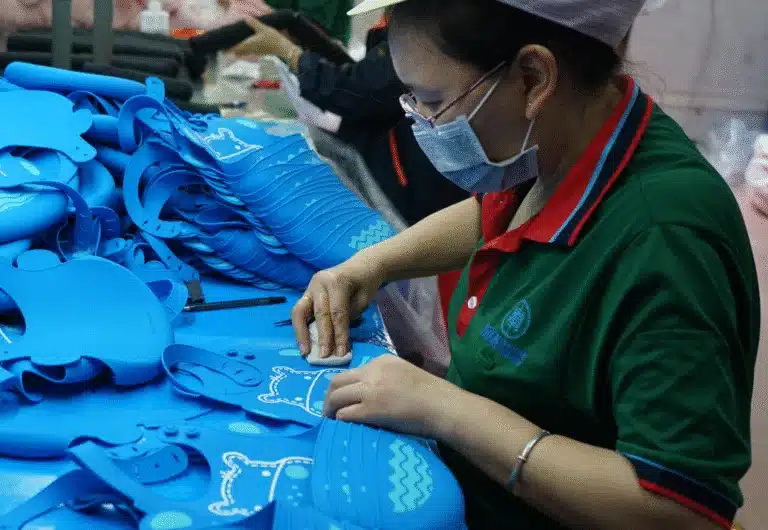
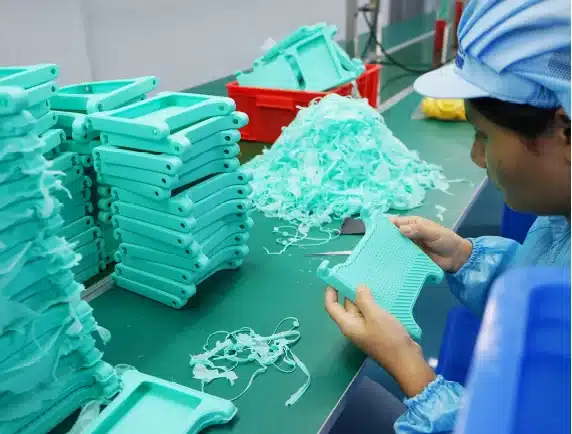
Post-processing. After demolding, the part goes through flash removal and plasma cleaning to obtain a smooth, impurity-free surface.
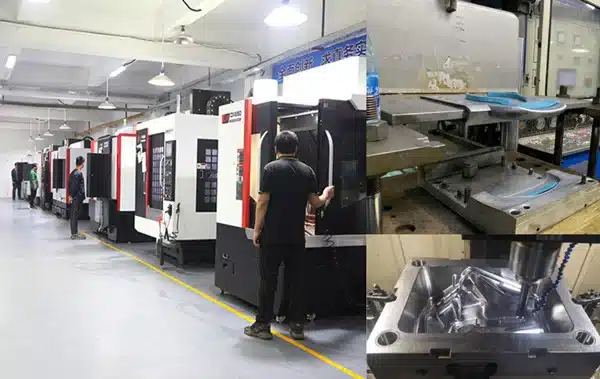

Quality inspection. Chemical safety is verified through FDA and LFGB certification, plus REACH. Use tests include torsion and tensile testing and bite testing.
How Quality and Safety Are Controlled
Raw materials and production standards. Food-grade silicone with FDA/LFGB certification is mandatory, and the material must be non-toxic and odorless. Production should take place in an ISO-certified facility, pass biocompatibility testing such as cytotoxicity testing, and undergo high-temperature deodorization (≥4 hours) to remove residual processing aids.
The key process and inspection parameters are:
|
Item |
Specification |
|---|---|
|
Curing temperature |
Controlled to ±2 °C |
|
Molding pressure |
8–15 MPa |
|
Cure time |
Within the t90 + 10% range for sufficient molecular chain relaxation |
|
Mold venting grooves |
0.5–1 per cm², depth 0.03–0.05 mm, to prevent air bubbles and volatile residue |
|
Tensile strength |
>8 MPa |
|
Tear strength |
>20 kN/m |
|
Torsion and tensile test |
Withstands 50 N tensile force |
Testing and certification. Products must pass LFGB, FDA, and RoHS certification. Units with burrs or air holes are rejected to keep chemical safety and surface quality within specification. Details of the inspection items and acceptance criteria are described on our quality control standards page.
How to Choose the Right Silicone Baby Teether
Color and design. Babies respond strongly to colors and shapes. Teethers with engaging patterns hold their attention longer.
Quality assurance. Check the product label and instructions before purchase to confirm the teether meets applicable safety standards.
Component safety. Simple designs carry the lowest risk. If the teether has accessories, check for loose or detachable parts and avoid products with insecurely assembled components.
Cleaning and Maintenance
Before first use, rinse the teether thoroughly with clean water to remove dust from production and transportation. Wash it with warm water and a food-safe detergent before and after each use, rinse thoroughly, and wipe it with a clean towel. Store the cleaned teether in a cool, dry place to prevent mold, and follow the product instructions during cleaning and disinfection to avoid damaging the material. A detailed routine is covered in our guide on keeping a silicone teether clean.
Inspect the teether before and after each use. Replace it immediately if any damage is found.
FAQ
Conclusion
Silicone baby teethers combine material safety with functional design, and their performance has been validated across the teething stages. For parents, the decision comes down to age-appropriate design, certified materials, and cleanability. For brands and retailers, it comes down to whether the manufacturer controls curing parameters, venting design, and inspection criteria at the factory level. Jution produces custom silicone baby products under documented process control. Contact the Jution team to discuss specifications, certification requirements, and production timelines for your teether project.
