
Silicone Baby Spoon and Feeding Bowl Set: The Ideal Choice for New Mothers
Choosing feeding tools is a health decision, not just a purchase: feeding affects nutrition intake, oral development, and eating habits. This article explains why a silicone spoon and feeding bowl set fits that role, who needs it at which stage, how it is made and tested, and how to choose and care for it.
What Is the Silicone Spoon and Feeding Bowl Set?

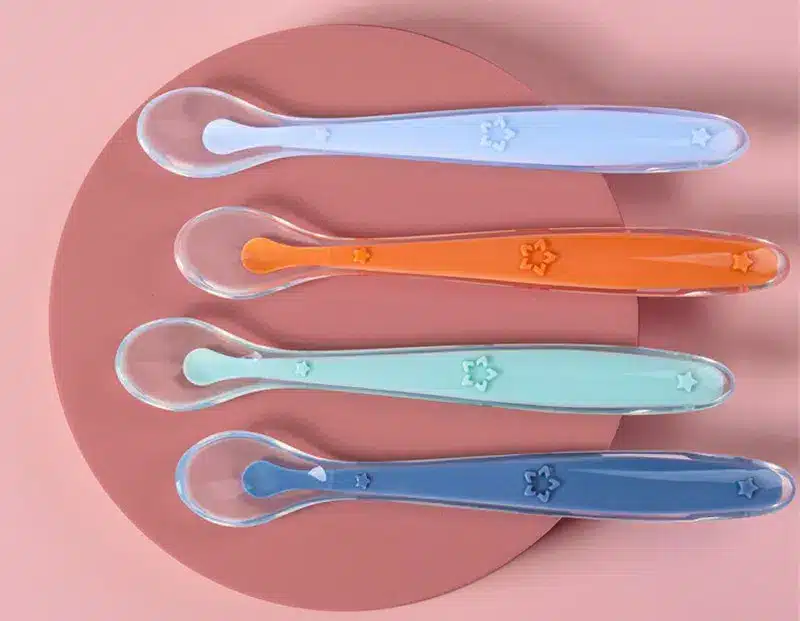
The set pairs a soft silicone spoon with a silicone feeding bowl, both in food-grade silicone — non-toxic, odorless, chemically stable, and heat-resistant. The bowl slows food temperature loss, and both pieces are soft enough to be safe against a baby’s mouth.
The set integrates safe feeding, temperature retention, gum protection, and convenient disinfection in one package.
Why It Beats Plastic and Ceramic
Who Uses It, and When
|
Age |
How the Set Is Used |
|---|---|
|
Under 3 months |
Parent-led feeding of water and medicine |
|
4–6 months |
First solids — rice cereal and purees — building familiarity with bowl and spoon |
|
Around 18 months |
Formal self-feeding training with lightweight silicone tableware |
The spoon’s capacity is about one-third smaller than an ordinary spoon, matching a baby’s small stomach capacity, and the silicone construction keeps food warm through long feeding sessions. During self-feeding practice, the grippy soft material survives drops and reduces waste.
Where It Fits
At home, drop-resistant and bite-resistant pieces make mealtimes calmer. For travel, the compact lightweight set packs into any bag. In early education settings, the soft, durable, easy-clean tableware suits groups of self-feeding children.
How the Set Is Made

How Quality Is Controlled
|
Stage |
Key Controls |
|---|---|
|
Raw material |
FDA/LFGB-certified food-grade silicone; volatile matter ≤0.5%, hardness ±2 Shore A, Mooney viscosity 40–60 MU; dry, dark, FIFO storage |
|
Mold |
High-precision parting design, polished and sandblasted surfaces |
|
Mixing |
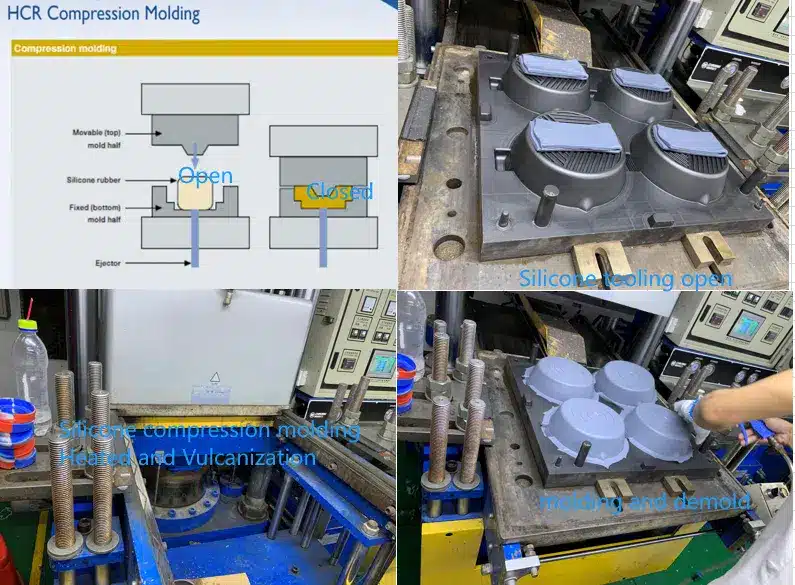
Internal mixer at 20–25°C for 8–12 minutes; discharge ≤50°C; Mooney fluctuation ±3 MU |
|
Vulcanization |
PLC monitoring of temperature (±2°C), pressure (8–15 MPa), time (t90 + 10%) |
|
Environment |
ISO Class 7 cleanliness for medical-grade production; masterbatch dosing error ≤0.3% |
|
Finished product |
No harmful release at 230°C; tear strength ≥25 kN/m; GB 4806.11 compliance including the September 2024 migration limits for aromatic primary amines and N-nitrosamines |
How to Choose the Right Set
Use and Cleaning
Rinse thoroughly with warm water before use. During infancy, sterilize with an electric steamer, UV lamp, or boiling. Clean and disinfect frequently, inspect the surface for cracks, and plan to replace spoons after about three months of use. Store away from sunlight and sharp objects.
Feeding technique matters too: place the non-slip mat before meals, hold the spoon at a slight angle, avoid pushing it deep into the baby’s mouth, and control feeding speed and portion size. For sterilization details, see how to sterilize silicone products.
FAQs
Related Reading
- What Does BPA-Free Mean for Baby Products?
- FDA and LFGB Certification for Silicone Baby Products
- What Is 100% LFGB-Grade Silicone?
A well-made silicone spoon and bowl set combines safety, practicality, and convenience for every feeding stage. JUTION is a one-stop custom silicone manufacturer — see our silicone baby bowl OEM services or contact us to discuss your project.
