
A comprehensive guide for selection and use silicone baby bib
As a professional with many years of experience in the silicone material field, I understand that choosing the right feeding supplies for your baby is more than just a simple purchase; it’s a decision that requires careful consideration. Among the many baby feeding supplies, silicone bibs may seem simple, but they are the most frequently used daily. They not only protect your baby’s clothes but also make feeding easier and more enjoyable. This article mainly introduces the definition and types of silicone bibs, why and when infants and young children need them, as well as precautions when purchasing and cleaning and maintenance methods. If you are interested in silicone bibs or want to learn more about them, please read this article.
What is a silicone bib?
Silicone bibs are made of 100% food-grade silicone and are designed specifically for infants and young children, while also taking into account the needs of the elderly and special groups. They are mainly used to catch food and saliva dropped by the user during meals to prevent clothing from being soiled. Their core advantages lie in their safe and non-toxic material, easy cleaning, and durability. Their three-dimensional design enhances practicality, and they integrate functions such as waterproof and anti-fouling, food catching, easy cleaning, and independent feeding training, making them an important tool for scientific feeding.


(I) Classification by Style
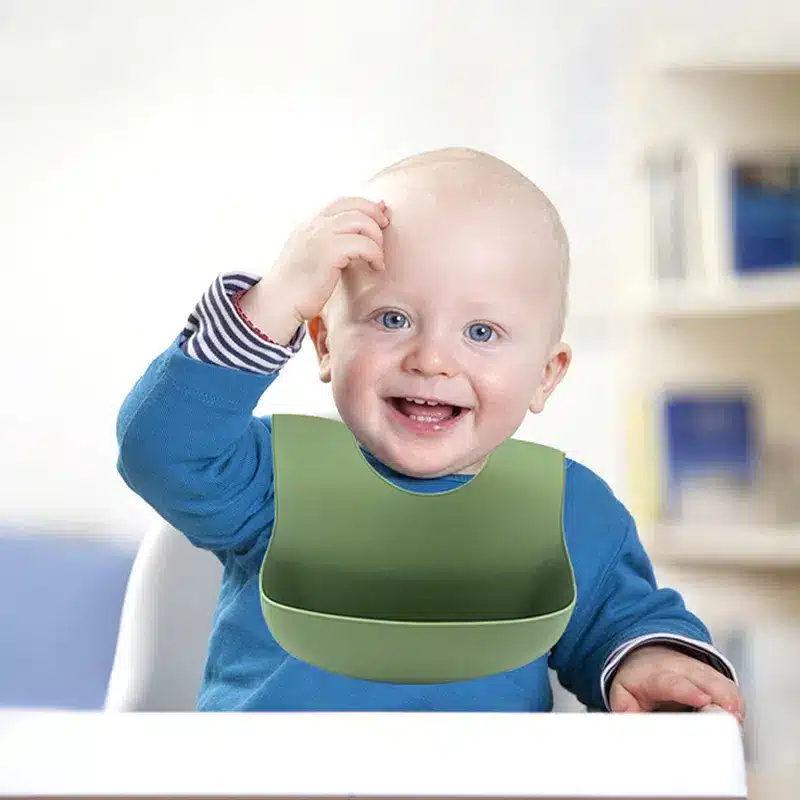
① Classic Bib
Features: Basic style, no pocket slots, fastened with snaps or Velcro
② 3D Bib
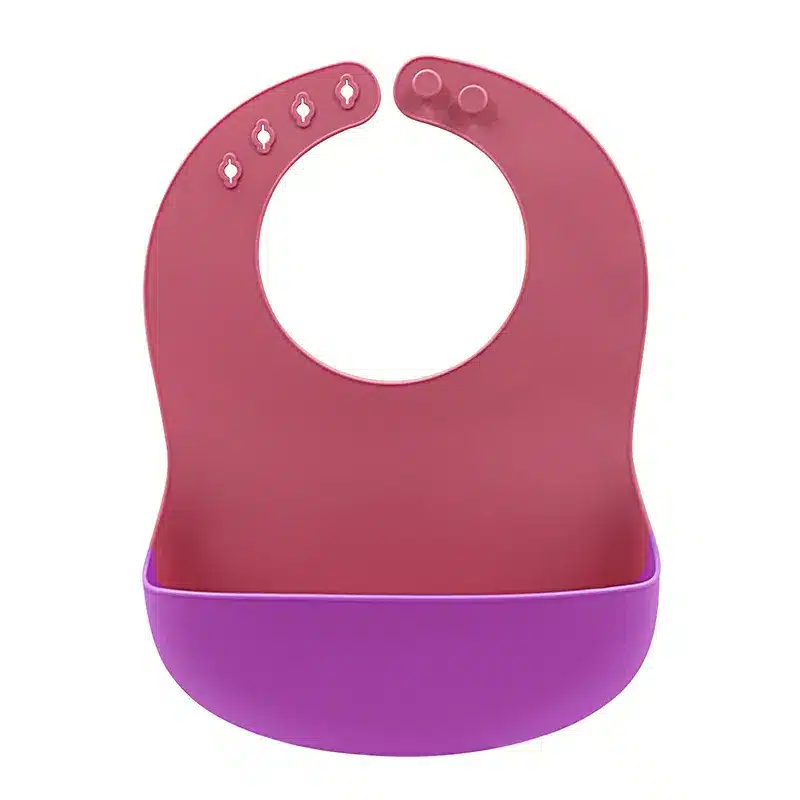
Features: 3D pocket slots at the bottom to catch food scraps
③ Overall Bib
Features: Covers the upper body and sleeves, providing greater protection
(II) Classification by Fastening Method

① Velcro
Features: Adjustable to fit different neck sizes (however, the Velcro may lose its stickiness after long-term use)
② Snap or Button
Features: More secure and durable
③ Elastic Band
Features: Elastic design, may not be suitable for babies with thick necks
(III) Classification by Functionality

① Foldable
Features: The bib folds into a compact size for easy carrying
② Removable Pocket
Features: The three-dimensional pocket can be removed and washed separately for hygienic and convenient use.
Why do babies need to use silicone bibs?

Who cares about silicone bibs?
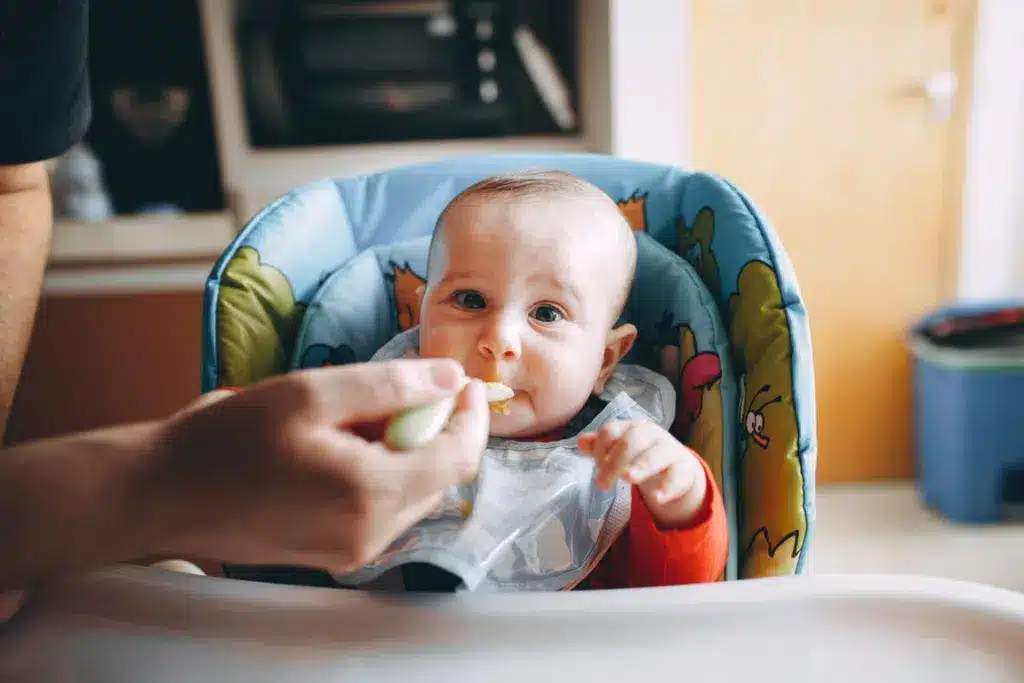
New moms and dads: Are you still worried about your child’s food stains all over their clothes? Are you still worried about cleaning up food residue on the floor? Silicone bibs with deep pockets and large capacity can help you solve this problem. They can catch food that your child drops during meals and prevent greasy stains from getting on their clothes.
Early childhood education institutions and nurseries: These places require group feeding, making cleanliness more challenging. Water- and oil-resistant silicone bibs with pockets can help reduce messes during mealtimes.
Gift buyers: Silicone bibs come in a variety of colors and shapes, and are beautifully packaged, combining practicality and aesthetics. They make a great newborn gift for friends and family.
At JUTION, we are highly praised for providing innovative custom silicone products, manufacturing expertise and technical solutions. If you want custom silicone products, please contact us.
When is the best time for babies to use silicone bibs?


- Babies aged 0-5 months:
- Babies are just beginning to drool, so a bib is essential at this stage to protect their delicate necks and prevent saliva buildup.
- Babies aged 6-8 months:
- Babies are active and are new to solid foods, making eating like a game. This makes it especially easy for them to get their clothes dirty. Silicone bibs with waterproof and detachable properties are recommended.
- Babies over 9 months old:
- The baby’s range of activities begins to expand and they begin to show interest in eating independently. Silicone bibs that prevent stains on clothes may help solve your problems.
Where is it suitable to use silicone bibs for babies?



Daily family life:
When eating at the table, especially when the baby is in the stage of adding complementary food and learning to eat by himself, silicone bibs are essential tools to help parents solve a lot of cleaning work on the floor and clothes after meals.
Dining out:
The silicone bib is compact and lightweight, foldable, easy to store and carry, suitable for outdoor camping or dining out, helping babies adapt to unfamiliar dining environments.
Early childhood education institutions:
The smooth surface and deep pocket design of the silicone bib can catch food dropped by babies who are eating independently, protect their clothes, and reduce the cleaning burden of the institution teachers.
How to produce silicone bibs?
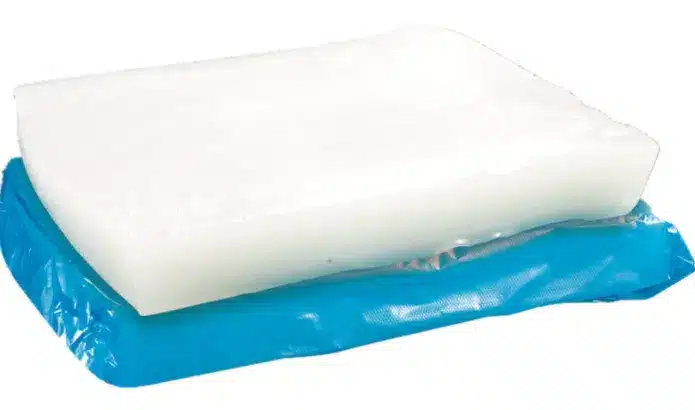
Raw Material Control
Select silicone suppliers certified for food contact materials. Raw materials must undergo visual inspection (color, transparency), physical property testing (hardness, tensile strength), and chemical property testing (acid and alkali resistance, aging resistance) to ensure compliance with the national food safety standard GB 4806.11.
Production and Processing Requirements
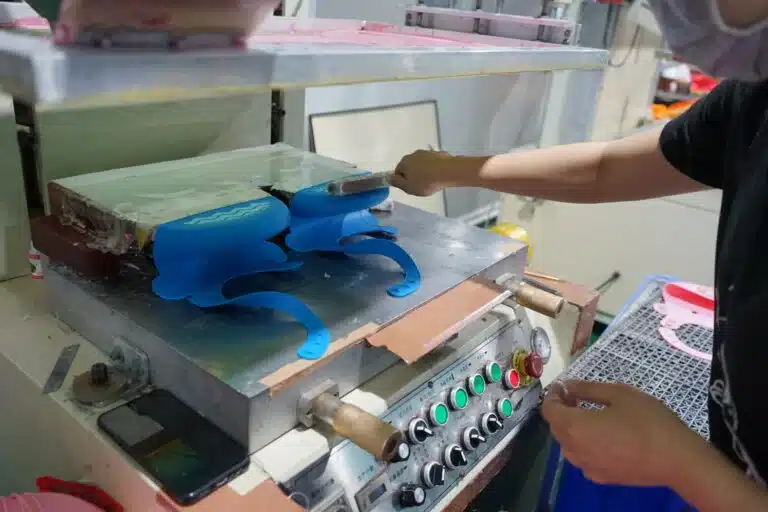
When using injection or compression molding, precise temperature and pressure parameters must be controlled to avoid bubbles and deformation.
After molding, the product undergoes post-processing, including cleaning and drying, to ensure a smooth, residue-free surface.
Finished Product Safety Testing
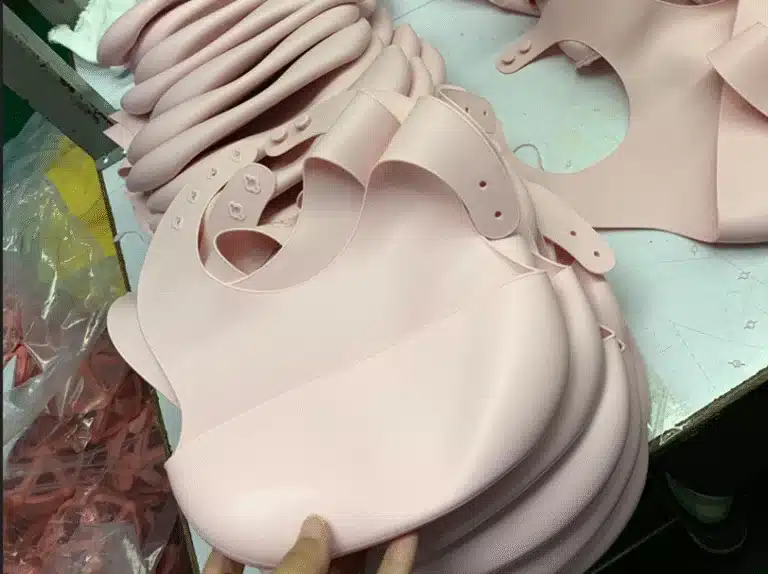
Online monitoring systems are used to monitor dimensional accuracy and surface finish in real time. Finished products must undergo microbial testing and migration testing (e.g., N-nitrosamines and aromatic primary amines must not be detected).
Toy edges must be smooth and burr-free, and small holes or gaps must be ≤3mm in diameter to avoid swallowing risks.
We at JUTION provide our partners with full support from idea to market launch, and are the preferred partner of leading silicone product brands and retailers.
How to choose the right silicone baby bib correctly?
- Safety: Before purchasing, be sure to check the product’s manufacturing information. It’s best to choose bibs that are BPA-free and non-toxic, ensuring they’re of high quality and pose no threat to your baby’s health.
- Bib Weight: Choose lightweight bibs (neck comfort weight ≤ 200g). Heavy bibs can compress the cervical spine, hindering feeding and neck development.
- Fixed Design: Prefer bibs with buckles or clips for adjustable neck circumference to accommodate growth.

How to control the quality of silicone bibs?
Raw Material Quality Control
Supplier Audit: Select FDA/LFGB-certified food-grade silicone suppliers to ensure they meet medical-grade standards.
Incoming Inspection: Raw materials are tested for indicators such as volatile matter (≤0.5%), hardness deviation (±2 Shore A), and Mooney viscosity (40-60 MU). Industrial-grade silicone requires additional testing for oil resistance and tear strength (≥25 kN/m).
Storage management: The warehouse should be dry and away from light, and the first-in-first-out principle should be implemented to ensure that the raw materials are used within the validity period.

Production Process Optimization
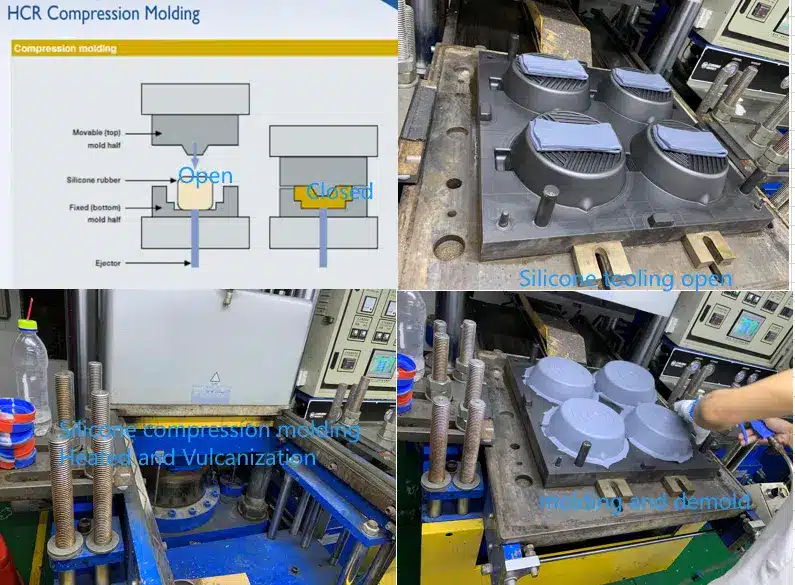
Mixing Process: Use a twin-rotor internal mixer, initial temperature 20-25°C, mixing time 8-12 minutes, discharge temperature ≤ 50°C, Mooney viscosity fluctuation range ±3 MU.

Mold temperature 160-180°C, 0.5-1 venting grooves per square centimeter, injection rate 15-25 g/s. Vulcanization uses a PLC system to monitor temperature (±2°C), pressure (8-15 MPa), and time (t90+10%) in real time.
Environmental and Equipment Management
Cleanliness Control: Medical-grade production requires mixing and curing in a Class 10,000 cleanroom to prevent microbial contamination.
Equipment Maintenance: Regularly inspect injection equipment accuracy to ensure mold surface finish and release quality.
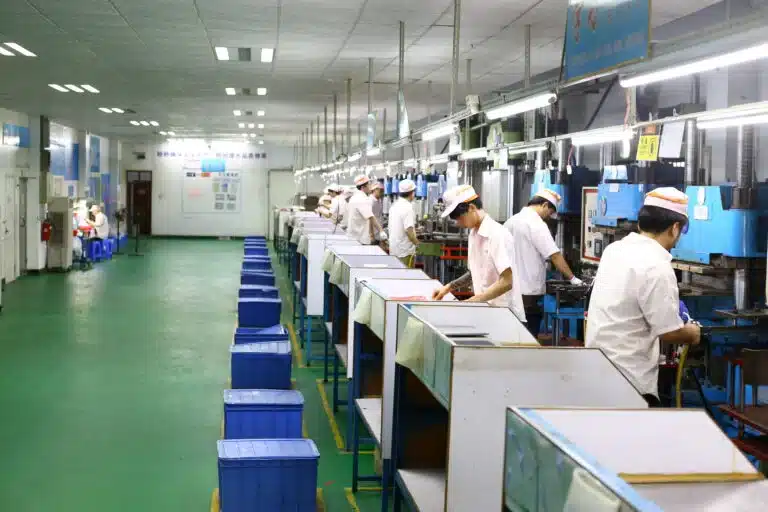
Finished Product Inspection
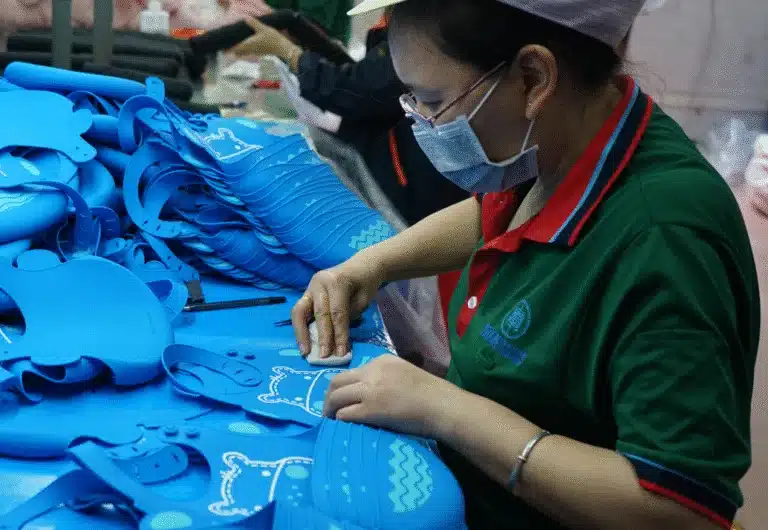
Appearance Inspection: The product surface must be free of bubbles, tears, or dimensional deformation. Impurity particles must be ≤ 0.3%.
Performance Testing: Testing for tensile strength, tear strength, and chemical stability to ensure compliance with safety standards.
We, JUTION, are a one-stop custom silicone product manufacturer and silicone molding solution provider specializing in the field of silicone products. If you want to customize silicone products or learn more about silicone products, please contact us.
How to clean and maintain the silicone bibs?
- Cleaning: Before and after each use, clean the bib with a neutral detergent, gently scrub the stains with a soft brush, and rinse thoroughly with warm water to ensure hygiene. If there are stubborn stains, you can use dishwashing liquid to clean.
- Drying and Storage: After washing, hang the bib in a well-ventilated area to dry, away from direct sunlight. Store in a cool, dry place to avoid scratches from sharp objects, which can affect the bib’s appearance and lifespan.
- Sterilization: Silicone bibs are heat-resistant and can be sterilized by boiling or steaming. Avoid contact between the bib and the bottom of the pot. Boil for 1-2 minutes to sterilize.

What are the precautions for using silicone baby bibs?
Conclusion
When babies eat, food residues are often left everywhere. To overcome this problem, silicone bibs are essential. Silicone bibs are an essential tool for modern scientific feeding. They can effectively solve multiple pain points in the feeding process, and they can be used as a “dirty-proof garment” for babies, relieving all the worries of babies and caregivers. Parents should consider quality and safety when purchasing silicone bibs. They should choose according to the baby’s age, usage scenarios, and specific needs. Regular cleaning and disinfection, scientific use, and maintenance can maximize the product value and service life.


