
How to print logo or pattern on Silicone bibs?
Baby product brands often receive complaints and feedback regarding printing issues when selling water bags, such as color fading/peeling/cracking, patterns appearing dusty or sticky, a “greasy” feel, significant color differences, and inconsistent shades within the same batch.
Silicone bibs are a typical product category characterized by “high-frequency washing + high contact safety + strong brand exposure”: Consumers wash them daily, use dishwashers, scald them at high temperatures, and repeatedly fold and stretch them; babies also chew on the edges and lick the area around the pattern. The result is—pattern fading, cracking, stickiness, odor, migration contamination, color difference, misalignment, and even non-compliance—any one of which can turn a potentially high-selling SKU into a product with negative reviews and returns.
Silicone bibs are difficult to print on because of their low surface energy and natural non-stick properties, making them difficult for many ordinary inks to adhere to. Add to this the presence of release agent residue, dust, and hand sweat and oil, and the printing adhesion becomes even more unstable. The industry-standard solution is: choosing the right process + choosing the right silicone ink system + proper surface treatment/curing + controlling the mass production process. Common and feasible methods include screen printing, pad printing, laser printing, heat transfer/water transfer printing, in-mold decoration, and the most stable method, embossing/relief (one-piece mold forming). The following article will thoroughly explain what you care about most: how to do it, how much it costs, how to choose, how to control it, and how to clean it in one go.
What are Silicone baby bibs and what is the use of Silicone baby bibs?
The silicone baby bibs are made of food-grade silicone material, BPA free, PVC free, and lead-free, Baby even pick up the dropped food out of their bib and eat it, we care about your baby’s safety, We make sure our bib is safe to touch baby’s sensitive skin. 100% waterproof, food-grade and stain-resistant, so you can rest assured that your cute bibs will not absorb any water or food!
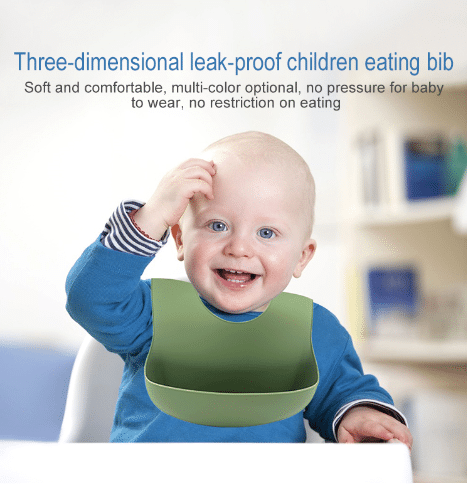
Our silicone baby bib will make mealtime easier and more fun for parents and babies. The soft, food-grade silicone material is easily clean and foldable for travel. The big pocket catches food and keeps your baby and surrounding area clean. An adjustable neck grows with a baby for the perfect fit. Waterproof and durable.
The Silicone baby bibs front pocket stays open, the food catcher pocket is big enough to provide good coverage for messy eaters, large pockets can easily catch a lot of spilled food, keep your baby’s clothes clean, silicone baby bibs with pocket makes clean up after meal times much easier.


The Benefits of the Silicone Baby Bibs:
Silicone bibs are not only easy to clean and durable, but they are also comfortable and safe for your little one to wear. Unlike cloth bibs, which can be scratchy and irritating, silicone bibs are soft and flexible. They won’t chafe or rub against your baby’s skin, and they won’t cause any allergic reactions. Additionally, silicone bibs don’t contain any harmful chemicals that can leach into your baby’s food, making them a safer choice overall.
What are the logo and pattern printing for silicone bibs?
With the development of the times, more and more brands are implementing brand recognition or decorative patterns on the surface of silicone bibs, including:
Monochrome Logo (Brand Name/Small Icon)
Multicolor Patterns (Cartoon, Graphics, Gradient Effects)
Functional Markings (Scales, Sizes, Warnings, Temperature Resistance/Cleaning Instructions, etc.)

Further Reading:
-
What you need to know about silicone allergy
-
TPU(Thermoplastic Polyurethane)and Silicone
-
The Silicone Toys for Kids and Adult -Pop-it
-
The safety and cleaning methods of silicone baby toys
-
The diversity of silicone toys Stimulating babies’ desire for exploration
-
The difference between silicone and rubber
Why print patterns or logos on silicone bibs?
There are many benefits to printing a logo on silicone baby bibs, including:
Printing your logo or pattern on silicone bibs is an excellent way to promote your brand and increase awareness. It offers a wide range of benefits, including durability, customization, versatility, and high-quality image reproduction. Whether you are looking to create promotional items or simply brand your products, printing a logo on silicone rubber bibs is an affordable and effective way to achieve your marketing goals.
Where can you print patterns or logos on silicone bibs?
Product location: Large area on the chest of the bib, pocket edges, small label area, shoulder strap area (different locations determine printability and abrasion resistance).
Supply chain location: Molding/injection molding plant, printing plant (or secondary processing within the same plant), packaging plant; the more dispersed the supply chain, the easier it is for color differences/contamination/registration errors to occur.
How to produce and choice the right way for put pattern or logo on the silicone bibs?
Achievable methods include screen printing, pad printing, laser marking, heat transfer/water transfer printing, in-mold decoration (IMD/IML), and mold embossing/relief printing.
CNC milling logo or pattern on the silicone mold/tooling directly for silicone baby bibs.
Debossed or embossed logo and pattern are engraved directly on silicone baby bibs tool molds during CNC mold-making process for the silicone baby bibs may be one of your choices. This kind of pattern or logo do not need the post process for the silicone baby bibs. Like laser Engraving or Printing. The disadvantage of this kind of logo or pattern is: They cannot change when the tooling finished.

Embossed logo or pattern on Silicone baby bibs
If you need your silicone baby bibs with the embossed logo or pattern on them. You have to open a new tooling to make the logo by CNC milling machine. you also can custom the shape, size, color anything you want to customized.

Debossed logo or pattern on Silicone baby bibs
If you need your silicone baby bibs with the debossed logo or pattern on that. You can choice open a new tooling to make the logo or pattern by CNC milling machine. And, you also can custom the shape, size, color anything you want to customized.
Strive for dishwasher-safe durability;
Single-color texture only (expressed through shadows/3D effects);
Large-volume, repeat orders are preferred (to reduce mold modification costs).
Logo lines should not be too thin: Embossing depth should be “visibly clear” (too shallow will be worn down/covered by food stains).
Avoid embossing at “high-friction fold points” (such as near the neck clasp).
A “fine matte” surface texture is recommended for a more premium feel and better resistance to fingerprints and oil stains.
Risks:
Requires mold modifications or new molds, resulting in higher upfront costs.
Cannot handle “multi-color patterns/gradients”.
Epoxy dripping logo or pattern on Silicone baby bibs
The Epoxy dripping logo and pattern allow you to put your multi-color logo or pattern put one the silicone baby bibs without printed. They can make embossed logo and debossed logo also. See the picture to get the difference. And for this kind of logos, you also need open the new tooling to custom everything you would like to put on the silicone baby bibs.
High 3D Effect and Visual Impact:The epoxy resin process creates a raised, transparent layer, giving the design a 3D effect with vibrant colors and high gloss, enhancing the product’s aesthetics.
Enhanced Durability: The cured epoxy resin layer possesses a certain degree of hardness and toughness, potentially providing physical protection for the design and reducing wear caused by friction or bending.
Compatibility with Complex Designs: Suitable for accurately reproducing intricate patterns, brand logos, or cartoon characters, with high color fidelity.
Potential Disadvantages of Epoxy Resin Bib Designs:
Higher Cost: The epoxy resin process is relatively complex, requiring specialized equipment and materials, which may increase production costs and lead to higher product prices.
Strict Process Requirements: Uneven epoxy resin application or insufficient curing may result in bubbles, delamination, or insufficient adhesion, affecting both aesthetics and safety.
Embossed logo or pattern on Silicone baby bibs


Laser Engraving Logo or pattern on Silicone baby bibs
Engraving, marking, etching: call it what you want, but this technology is great for imprinting images onto a surface. It’s a permanent mark that simply can’t wear off.The advantage is that there is no additional ink layer.
You also can choice put your silicone baby bibs logo or pattern by laser engraving.

Screen Printing LOGO or pattern on Silicone baby bibs
Screen printing is a printing technique where a mesh is used to transfer ink (or dye) onto a substrate, except in areas made impermeable to the ink by a blocking stencil. Silicone-specific ink is screen-printed onto the silicone surface, and then cured by heat to form a strong coating. It is generally believed in the industry that a compatible silicone ink system and appropriate treatment are necessary for durable adhesion to silicone surfaces. Good at large monochrome/two-color pattern on the chest of the bib;Large production volume (to reduce the cost of mesh opening/fixtures);Pursuit of high color saturation and brand recognition.

Heat Transfer Printing LOGO or pattern on Silicone baby bibs
The benefits of Heat transfer printing the logo or pattern on the silicone baby bibs: Can get multi-color, mixed color, fading, Camouflage, Carbon Fiber, and Wood Grain colors/Can Change color and pattern by Film Heat transfer printing is widely used as it creates durable, heat resistant, adhesive and water-resistant designs. Additionally, the colors created in the image are high resolution with bright and bold colors. So, Your silicone baby bibs are more cute and attractive for the baby.

Water Transfer Printing LOGO or pattern on Silicone baby bibs
The water transfer printing are wide ranges of water transfer printing films and the most popular patterns include camo, wood grain, carbon fiber, marble, and camo. The camo film is the most popular pattern and is also the common pattern for hydro-dipping guns. When you need get the silicone baby bibs pattern or logo color like that ,you need choice the water transfer printing method.

In-Mould Decoration LOGO or pattern on Silicone baby bibs
In-Mold Decorating provides original equipment manufacturers (OEMs) and molders an alternative method for decorating silicone baby bibs. With IMD, graphics are printed on a film, using one or a hybrid of several printing processes, which is then inserted into a mold cavity to get a custom logo or a pattern on silicone baby bibs as the clients needed.
Heat transfer, water transfer, and in-mold transfer are suitable for IP collaborations, complex multi-color designs, gradients, or realistic patterns;
You’re willing to invest higher process management costs for “visual effects.”
Bis are a frequently washed item. If you choose this type of “film/transfer layer” solution, be sure to perform the following tests in advance:
Dishwasher cycle simulation
Washing after oil stains/ketchup/curry stains
Cracking test after folding and stretching (“pattern peeling,” “edge lifting”).
Who would print a pattern or logo on a silicone bib?
Baby & Toy Brands / DTC Brands: Focus on brand consistency, color scheme, compliance documentation, and stable supply.
Amazon / Shopee / Lazada Sellers: Focus on low MOQ, fast delivery time, and low risk of negative reviews (color fading/odor).
Gift Channels / Co-branded IP Partners: Focus on pattern complexity, color reproduction, copyright protection, and sampling efficiency.
Maternal & Infant Retail Procurement: Focus on durability, traceability, after-sales risk, and testing reports.
When need confirm if print pattern or logo on your silicone bib?
Project Initiation Stage: First decide on “embossing/laser printing/printing,” as this will affect mold design, tooling, and pricing structure.
Prototype Stage: Verification samples demonstrating “adhesion, washability, and abrasion resistance” are essential; don’t just focus on appearance.
Before Mass Production: Secure Pantone, confirm process parameters, create a Golden Sample, and obtain first-article confirmation.
Before Peak Season: Multi-color printing capacity is high; allow for production scheduling windows (especially for multi-color screen printing/pad printing). Silicone inks typically require a thermosetting process, which is a key variable for capacity and delivery time.
How much for printing pattern or logo on your silicone bib?
The cost of printing logos and patterns on silicone bibs generally consists of the one-time cost of the printing fixture + the cost of processing a single piece + risk costs, etc.
1) One-time costs (sampling/jigs/screen printing/steel plate/mold modification)
Emboiling/Relief Printing: Mold engraving or modification fees (higher initial cost, but most cost-effective when amortized over bulk production)
Screen Printing: Screen printing, film, positioning jigs (increases with the number of colors)
Pad Printing: Steel plate/pad/jigs (more expensive the more intricate the design)
Laser Printing: Usually low initial cost (more about machine setup and file processing)
2) Unit processing cost (decreases with quantity)
Influencing factors are very “realistic”:
Number of colors (1 color vs. 3 colors, a significant difference)
Printing area (large chest image vs. large print area) (Small corner label)
Yield Rate (Alignment, dirt, and missing prints will all eat up profits)
Packaging Method (Individual OPP, Color Box, Hanging Card)
Market Compliance Requirements (Should more stringent migration/heavy metal/phthalic acid testing be conducted?)
3) Risk Costs (Most easily overlooked but most fatal)
Customer complaints/returns/Negative platform reviews
Batch color difference leading to rework of the entire batch
Failure to pass inspection leading to delayed shipment
Experience and advice: If your brand is positioned towards the mid-to-high-end market, it’s better to spend a little more upfront on a “more durable solution” (embossing/laser printing/high-standard screen printing/heat transfer printing system) rather than trying to reduce costs to “just enough to get it printed.”
How to choose the correct way to put your logo or pattern on your silicone bibs?
1:What is your desired lifespan?
Target: Long-term dishwasher/abrasion resistance → Prioritize embossing/relief printing, laser printing
Target: Visually appealing, acceptable wear and tear → Screen printing/transfer printing
2: How many colors are in the pattern? Does it have gradients/photographic feel?
Single color/two colors: Screen printing is the most economical.
Multi-color complex/gradient: Transfer printing/IMD (but washability verification is required)
3:Where to print? What is the area? How curved is the surface?
Large flat area:Screen printing
Small curved surface/button area: Pad printing
Any location but single color:Laser printing
4: What compliance “narrative” does your market require?
US children’s products:** Focus on surface coating lead limits (90 ppm) and total lead limits for accessible parts (100 ppm), etc. Printing inks/coating systems must meet the corresponding framework.
The EU typically focuses on the REACH framework and phthalate restrictions, with particular emphasis on products that are ingestible or come into contact with infants and young children.
When controlling “migration elements” using a toy chemical safety approach, the testing framework of EN 71-3 is often referenced.
5th: What is the quantity? Will you frequently change designs?
Long-term stable large-volume orders → Embossing/screen printing is the most cost-effective.
Multiple SKUs, small batches, frequent design changes → Laser/small-area pad printing is more flexible.
6th: Do you prioritize “brand recognition” or “decorative value”?
Brand recognition (clear, durable logo) → Embossing/laser/monochrome screen printing
Decorative value (IP, patterns) → Multi-color schemes, but the risk of washability issues must be addressed beforehand.
How to control the logo or pattern quality for your silicone bibs?
Incoming Material Control (Materials and Inks)
Silicone Raw Materials: Prioritize platinum-cured/food-contact grade systems and prepare compliance documentation for the corresponding market (e.g., FDA/LFGB, etc.).
Inks/Coatings: Must provide a declaration of ingredient compliance and feasibility testing by a third party; “can be printed” does not equal “can pass inspection/is washable.”
Process Control (Most Critical)
Mold Release Agent Management: Mold release agents are one of the biggest killers of adhesion—avoid them if possible; if they must be used, post-treatment cleaning must be standardized.
Surface Treatment Records: Plasma/primer/cleaning methods must have clear curing parameters, not rely on the operator’s feel.
Curing Curve Locking: Temperature, time, and loading must be recorded; silicone inks typically rely on thermal curing, which determines the final durability.
Jig Positioning: Allow for tolerances for alignment deviations (e.g., ±0.5mm/±1mm), and sign off on the first piece during acceptance.
Finished Product Testing
Adhesion: Cross-cut adhesion test/tape test (standards vary by customer, but you should at least be able to self-test and filter out risky batches)
Abrasion Resistance: Dry/Wet abrasion test
Washability: Hand wash + dishwasher simulation (strongly recommended for bibs)
Odor and Volatility: Especially for baby products, secondary vulcanization/baking may be necessary to remove odors
Chemical Safety Spot Check: Implement strategies for heavy metals/phthalates/migrating elements based on market conditions (include the ink layer in the system)
How to clean the logo or pattern silicone bibs?
Daily Cleaning (Recommended)
Warm water + neutral detergent + soft sponge
Avoid steel wool and abrasive brushes (they will accelerate wear and tear on the pattern)
Let them air dry thoroughly before storing (to reduce odor and dust accumulation)
The problem you will meet in silicone bibs pattern or logo?
- Printing color fading/peeling/cracking
Causes: Low surface energy + residual release agent + insufficient curing/ink system mismatch.
For ultimate durability: Prioritize embossing/laser printing (no ink layer).
For screen printing/pad printing: Standardize cleaning and heat curing processes; apply a primer and lock the curing curve if necessary; silicone inks typically require baking curing to achieve final performance.
- Pattern appears dusty, sticky, and feels “oily”.
Causes: Incomplete curing or unstable ink ratio/catalytic system.
Solutions:
Re-verify curing temperature/time and loading amount.
Control workshop dust and use gloves during handling to avoid secondary surface contamination.
Pain Point 3: Large color difference, inconsistent shades within the same batch.
Causes: Differences in color paste/ink batches, over-/under-curing, variations in production cycle.
Solution:
Pantone color locking + Golden Sample + First-piece sample approval
Sampling confirmation for each batch (especially light/macaron colors)
Pain Point 4: Concerns about chemical safety (Will the ink contain heavy metals/phthalates? Will my baby ingest it?)
Connect with Jution Silicone expert to get more suggestion.
More FAQ for printed silicone baby bibs.
1) Q: Can silicone bibs be printed with colored patterns?
A: Yes. Common methods include screen printing (suitable for 1-2 color bulk orders) or transfer printing/IMD (suitable for complex multi-color designs). For complex patterns, it’s crucial to verify washability and the risk of edge peeling.
2) Q: Which logo is the most durable?
A: Generally, embossing/relief printing is preferred, followed by laser printing (no ink layer), and then high-standard screen printing/pad printing (depending on surface treatment and curing).
3) Q: Why did the logo printed by my previous supplier peel off?
A: Silicone surfaces are non-stick. If there is residual mold release agent, insufficient cleaning, incompatible ink systems, or insufficient curing, it is prone to peeling. Silicone inks usually require baking and curing to achieve their final performance.
4) Q: Will printing affect food safety/baby’s ingestion safety?
A: The key lies in the compliance control and sampling inspection strategy of the ink/coating system. Children’s product surface coatings have lead limits in the US (e.g., 90 ppm), and the EU has REACH frameworks and phthalate restrictions; it is recommended to include the printed layer in the system management.
5) Q: Can Pantone spot colors be produced?
A: Yes, but proofing and batch confirmation are required; light colors are more susceptible to curing curve effects, so a golden sample is recommended.
6) Q: What is the minimum line width/minimum text size?
A: It depends on the process: embossing and laser printing are more suitable for fine lines; screen printing is affected by mesh size and ink leveling, and too fine lines are prone to blurring. It is recommended that you provide the customer with a “Manufacturability Advisory” (DFM) to avoid problems.
7) Q: Can bibs be dishwasher safe? Will the pattern fade?
A: The material is generally dishwasher safe, but whether the pattern fades depends on the process and verification. It is recommended to include “dishwasher rack, avoid strong abrasion” in the instructions and make a commitment based on your verification data.
8) Q: What should I do if silicone develops an odor after prolonged use? A: You can try warm water and a neutral detergent; if the smell persists, some sources suggest soaking in vinegar water or gently baking to remove the odor, but for printed products, it’s recommended to test on a small scale first to avoid affecting the printing layer.
9) Q: Why is multi-color printing more expensive and has a longer lead time?
A: Multi-color printing means multiple positioning, multiple curing/baking processes, and higher yield pressure. The process characteristics of silicone inks before curing also bring additional operating costs.
10) Q: How to reduce “color fading negative reviews”?
A: Three things are most effective: choose a more durable process (embossing/laser printing), make curing and cleaning standard operating procedures (SOPs), and clearly write the care instructions and display them in a prominent position on the product details page.
Conclusion
Printing a logo or pattern on silicone baby bibs is a great way to give your brand a professional look and feel. With the right tools and techniques, you can easily print your logo or pattern on to silicone baby bibs with high-quality results. We hope that our guide has helped you understand how to print a logo or pattern on silicone baby bibs so that you can create stunning products for your business.
If you need:
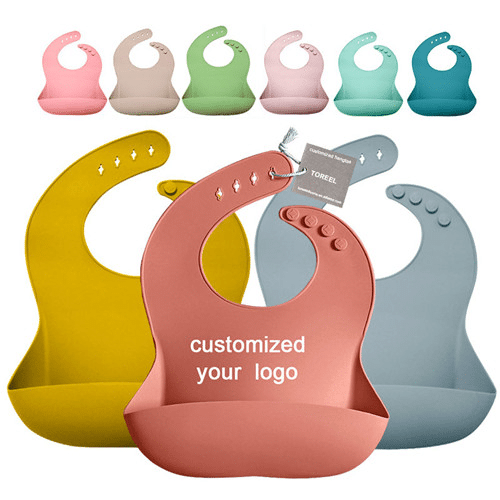
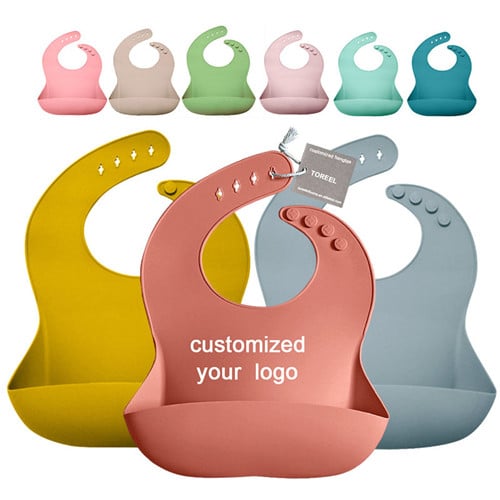
When you are looking to expand your product offerings. Custom Silicone baby bibs with Company Logos for Your Own Business.
Elevate Your Business with Custom Company Logo Silicone Baby Bibs as Promotional Gifts.
Serve as valuable marketing tools for these businesses to enhance their brand visibility, engage customers, and drive business growth.
Provide them with a tangible and effective way to engage supporters, spread their message, and generate funds for their causes.
The silicone baby bibs are ideal for creating memorable giveaways, promotional items, or merchandise for events, conferences, exhibitions, and corporate gatherings.
When you need customized merchandise for your students, faculty, alumni, patient or fundraising events. Our products can help them foster a sense of pride, belonging, and community within their educational communities.
Marketing managers, brand managers, and advertising agencies, who seek innovative and effective promotional strategies to boost brand awareness and engage their target audience. Our silicone promotional products provide them with unique and customizable options to achieve their marketing goals.
Connect with Jution Silicone Today to Enhance Your Brand’s Visibility with Custom Silicone baby bibs.
#Siliconebiblogoprinting #customsiliconebibspatterns #siliconebibs logoprinting #siliconeproductscreenprinting,#siliconepadprinting, #siliconelasermarking #siliconebiblogoembossing #food-grade siliconebibcustomization
Related Blog
-
Silicone placemat and bib set, helping to cultivate your baby’s dining habits
Silicone placemat and bib set, helping to cultivate your baby’s dining habits As a silicone industry expert, I’ve witnessed how silicone materials have revolutionized the infant and toddler products market from an industrial perspective. Silicone placemat and bib sets are more than just simple dining tools; they’re scientific teaching aids that foster healthy eating habits…
-
silicone baby bib – Waterproof bib for babies when eatin
silicone baby bib – Waterproof bib for babies when eatin As a senior practitioner who has been deeply involved in the silicone industry for many years, I have witnessed the iterative upgrades of countless maternal and child products over the years, but few products can combine practicality, safety and aesthetics so perfectly as food-grade silicone…
-
A comprehensive guide for selection and use silicone baby bib
A comprehensive guide for selection and use silicone baby bib As a professional with many years of experience in the silicone material field, I understand that choosing the right feeding supplies for your baby is more than just a simple purchase; it’s a decision that requires careful consideration. Among the many baby feeding supplies, silicone…
-

What If The Silicone Bib Gets Sticky?
What if the silicone bib gets sticky? This article mainly discusses the problem of silicone bibs becoming sticky, including why they become sticky, how to deal with them after they become sticky, and how to store bibs to prevent them from becoming sticky. If you are interested in it, please visit: What is a silicone…
-
How To Make Silicone Bibs?
How To Make Silicone Bibs? Silicone baby products are experiencing rapid growth in the global market, especially in Europe, America, Australia, Japan, and South Korea. Food-grade silicone baby bibs have gradually replaced traditional cloth bibs and become the mainstream product. However, many customers are complaining about issues such as odor, pocket collapse, and easy breakage…
-
How Many Silicone Bibs Do I Need?
How many silicone bibs do I need? That is a good question. At least 6pcs silicone bibs you need. When you are a little one, you may need the silicone bibs at least 2 from 3 months to 18 months. And then, you need the big size silicone bibs from 18-36 months, you need another…
-
How to Print Logo or Pattern on Silicone Bibs?
How to print logo or pattern on Silicone bibs? Baby product brands often receive complaints and feedback regarding printing issues when selling water bags, such as color fading/peeling/cracking, patterns appearing dusty or sticky, a “greasy” feel, significant color differences, and inconsistent shades within the same batch. Silicone bibs are a typical product category characterized by “high-frequency…
-

Why are Silicone Bibs Better?
Why are Silicone Bibs Better? As a parent, choosing the right bib for your baby is essential for their comfort, safety, and cleanliness. Silicone bibs have gained popularity in recent years and are often considered a top choice for parents. But why are silicone bibs better? Let’s dive into the benefits of silicone bibs and…
-
What Type of Bibs Are Best for Newborns?
What Type of Bibs Are Best for Newborns? Bibs are an essential item for parents of newborns, helping to keep your little one clean during those first few months. There are many factors to consider when choosing the perfect bib for your newborn(How Many Silicone Bibs Does A Baby Need?), including the material. In this…
-
What is the Best Material for Bibs?
What is the Best Material for Bibs? What are baby bibs? Babies are not only cute but very messy! Comes in baby bibs that help keep dribbled milk from breastfeeding or formula off your kid’s clothing during feeding and helps sop up the inevitable spit-up that comes after, thus maintaining a standard of cleanliness. Baby…


